การประเมินความเสี่ยงด้านสิทธิมนุษยชน
ในปี 2565 บริษัทดำเนินการประเมินความเสี่ยงด้านสิทธิมนุษยชนตลอดห่วงโซ่คุณค่าธุรกิจ โดยร้อยละ 100 ของกิจกรรมทางธุรกิจ Oil และ Non-๐il ได้รับการประเมินความเสี่ยงด้านสิทธิมนุษยชนภายใต้หลักการบริหารจัดการความเสี่ยงด้านความยั่งยืนขององค์กร บริษัทได้เปรียบเทียบเกณฑ์โอกาสเกิด (likelihood) กับหลักเกณฑ์การประเมินความเสี่ยงองค์กร และระดับผลกระทบ (Impact) กับหลักสากลของสหประชาชาติ (United Nation Guiding Principle on Business and Human Rights) และพิจารณาประเด็นความเสี่ยงด้านสิทธิมนุษยชนอย่างรอบด้าน รวมถึงบุคคลที่อาจได้รับผลกระทบ ครอบคลุม พนักงาน ชุมชนและสิ่งแวดล้อม คู่ค้าและผู้รับเหมา และลูกค้า ซึ่งประเด็นที่มีการประเมินความเสี่ยงด้านสิทธิมนุษยชน ได้แก่
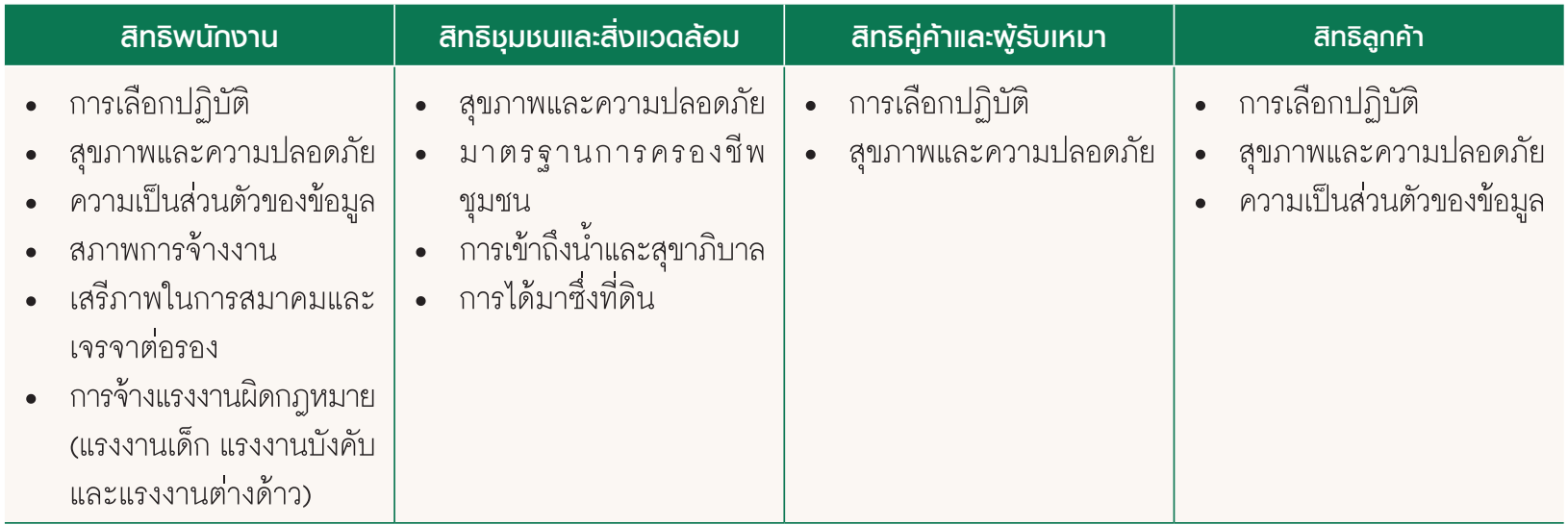
กระบวนการประเมินความเสี่ยงด้านสิทธิมนุษยชน
พีทีจี ดำเนินการประเมินความเสี่ยงด้านสิทธิมนุษยชน โดยการประเมินความเสี่ยง 2 ประเภท คือ 1) ความเสี่ยงตามลักษณะธรรมชาติ: ความเสี่ยงที่ปราศจากการควบคุมหรือมาตรการบรรเทาผลกระทบ 2) ความเสี่ยงที่หลงเหลืออยู่: ความเสี่ยงที่หลงเหลืออยู่ หลังการควบคุมหรือมาตรการบรระเทาผลกระทบ ในการจัดลำดับความเสี่ยงของประเด็นด้านสิทธิมนุษยชน บริษัทอ้างอิงประเด็นด้านสิทธิมนุษยชนที่มีความเสี่ยงที่หลงเหลืออยู่ในระดับสูง-สูงมาก โดยบริษัทกำหนดมาตรการบรรเทาผลกระทบสำหรับทุกประเด็นด้านสิทธิมนุษยชน เพื่อเป็นการป้องกันผลกระทบต่อผู้มีส่วนได้เสียทุกกลุ่ม
บริษัทใช้เมตริกซ์ความเสี่ยง 5 ระดับ (ต่ำมาก-สูงมาก) เพื่อประเมินระดับความเสี่ยงของแต่ละประเด็นด้านสิทธิมนุษยชน โดยเปรียบเทียบเกณฑ์โอกาสเกิด (แกน X) และระดับผลกระทบ (แกน Y)
| ระดับความเสี่ยง | โอกาสเกิด (ความถี่) | ผลกระทบ | ||
|---|---|---|---|---|
| ระดับผลกระทบ | จำนวนผู้ได้รับผลกระทบ | ความสามารถในการเยียวยา | ||
| 5 (สูงมาก) |
เกิดขึ้นมากกว่า 1 ครั้งต่อเดือน | ผู้มีส่วนได้เสียเสียชีวิต | มีผลกระทบต่อผู้มีส่วนได้เสียในวงกว้าง หรือเกินขอบเขตของพื้นที่ปฏิบัติการ | ไม่สามารถควบคุมหรือบรรเทาผลกระทบด้านสิทธิมนุษยชน ให้กลับสู่สภาวะปกติ และ/หรือใช้ระยะเวลาในการเยียวยามากกว่า 5 ปี |
| 4 (สูง) |
เกิดขึ้น 1 ครั้งต่อเดือน | ผู้มีส่วนได้เสียทุพพลภาพ | มีผลกระทบต่อผู้มีส่วนได้เสียที่เกี่ยวข้องมากกว่า 1 กลุ่มขึ้นไป(เช่น กระทบทั้ง ลูกค้าและพนักงาน เป็นต้น) | ควบคุมหรือบรรเทาผลกระทบด้านสิทธิมนุษยชนให้กลับสู่สภาวะปกติได้ในระยะเวลา 3-5 ปี |
| 3 (ปานกลาง) |
เกิดขึ้น 4-6 ครั้งต่อปี | ผู้มีส่วนได้เสียได้รับบาดเจ็บสาหัสและ หยุดงานเกินกว่า 3 วัน | มีผลกระทบต่อผู้มีส่วนได้เสียส่วนใหญ่ เพียง 1 กลุ่ม (เช่น ลูกค้า หรือคู่ค้า หรือชุมชน หรือ พนักงาน หลายราย) | สามารถควบคุมหรือบรรเทาผลกระทบด้านสิทธิมนุษยชนให้กลับสู่สภาวะปกติได้ในระยะเวลา 1-3 ปี |
| 2 (ต่ำ) |
เกิดขึ้น 2-3 ครั้งต่อปี | ผู้มีส่วนได้เสียได้รับบาดเจ็บและต้องพบแพทย์ | มีผลกระทบต่อผู้มีส่วนได้เสียบางส่วน เพียง 1 กลุ่ม (เช่น กระทบแค่ ลูกค้า หรือคู่ค้า หรือชุมชน หรือพนักงาน บางส่วนเท่านั้น) | สามารถเยียวยาผู้มี่ส่วนได้เสียที่เกี่ยวข้องให้กลับสู่สภาวะปกติได้ในระยะเวลา มากกว่า 3 เดือน แต่น้อยกว่า 1 ปี |
| 1 (ต่ำมาก) |
เกิดขึ้น 1 ครั้งต่อปี | ไม่ส่งผลกระทบต่อสุขภาพ อนามัย และความปลอดภัยของพนักงาน หรือผู้มี่สวนได้เสีย (การปฐมพยาบาลเองเบื้องต้น) | ไม่ส่งผลกระทบต่อผู้มีส่วนได้เสียที่เกี่ยวข้อง | สามารถควบคุมหรือบรรเทาผลกระทบด้านสิทธิมนุษยชน ให้กลับสู่สภาวะปกติได้ในระยะเวลาไม่เกิน 3 เดือน |
ขอบเขตการประเมินความเสี่ยงด้านสิทธิมนุษยชน
| ธุรกิจ OIL และ Non-oil | |||||
|---|---|---|---|---|---|
| ห่วงโซ่คุณค่าธุรกิจ | จัดหา | ขนส่ง | จัดเก็บ | การตลาด | หน่วยงานสนับสนุน |
| กิจกรรมทางธุรกิจ | ● น้ำมัน ● ก๊าซ LPG ● วัตถุดิบและอุปกรณ์สำหรับธุรกิจค้าปลีก |
● น้ำมัน ● วัตถุดิบและอุปกรณ์สำหรับธุรกิจค้าปลีก |
● น้ำมัน ● ก๊าซ LPG |
● สถานีบริการน้ำมันและก๊าซ LPG ● ร้านจำหน่ายก๊าซหุงต้ม ● ร้านสะดวกซื้อ ● ร้านกาแฟและเครื่องดื่ม ● ศูนย์บริการและซ่อมบำรุง |
● ฝ่ายทรัพยากรบุคคล |
| บริษัท | ● บริษัท พีทีจี เอ็นเนอยี จำกัด มหาชน ● บริษัท ปิโตรเลียมไทย คอร์ปอเรชั่น จำกัด ● บริษัท พีทีจี โลจิสติก จำกัด ● บริษัท บีพีทีจี จำกัด ● บริษัท แอตลาส เอ็นเนอยี จำกัด ● บริษัท กาแฟพันธุ์ไทย จำกัด ● บริษัท จี เอฟ เอ คอร์ปอเรชั่น (ไทยแลนด์ ) จำกัด ● บริษัท สยาม ออโต้แบคส์ จำกัด ● บริษัท แมกซ์ การ์ด จำกัด ● บริษัท แมกซ์ โซลูชัน เซอร์วิส จำกัด |
||||
ผลการประเมินความเสี่ยงด้านสิทธิมนุษยชนกลุ่มบริษัท พีทีจี และบริษัทร่วมค้า
ร้อยละของกิจกรรมทางธุรกิจที่ได้รับการประเมินความเสี่ยงด้านสิทธมนุษยชน
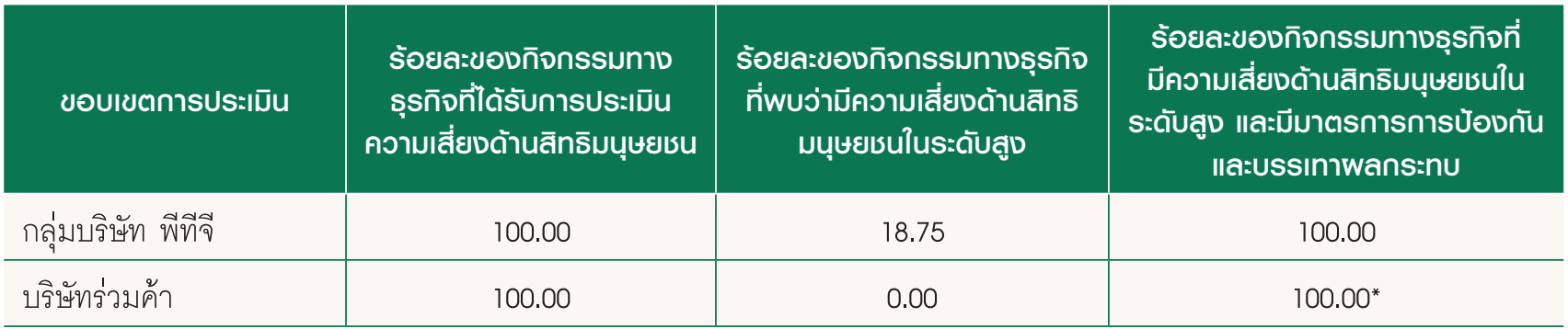 หมายเหตุ*: บริษัทมีมาตรการป้องกันการละเมิดสิทธิมนุษยชนในทุก ๆ กิจกรรมทางธุรกิจ
ผลการประเมินความเสี่ยงด้านสิทธิมนุษยชนของคู่ค้า

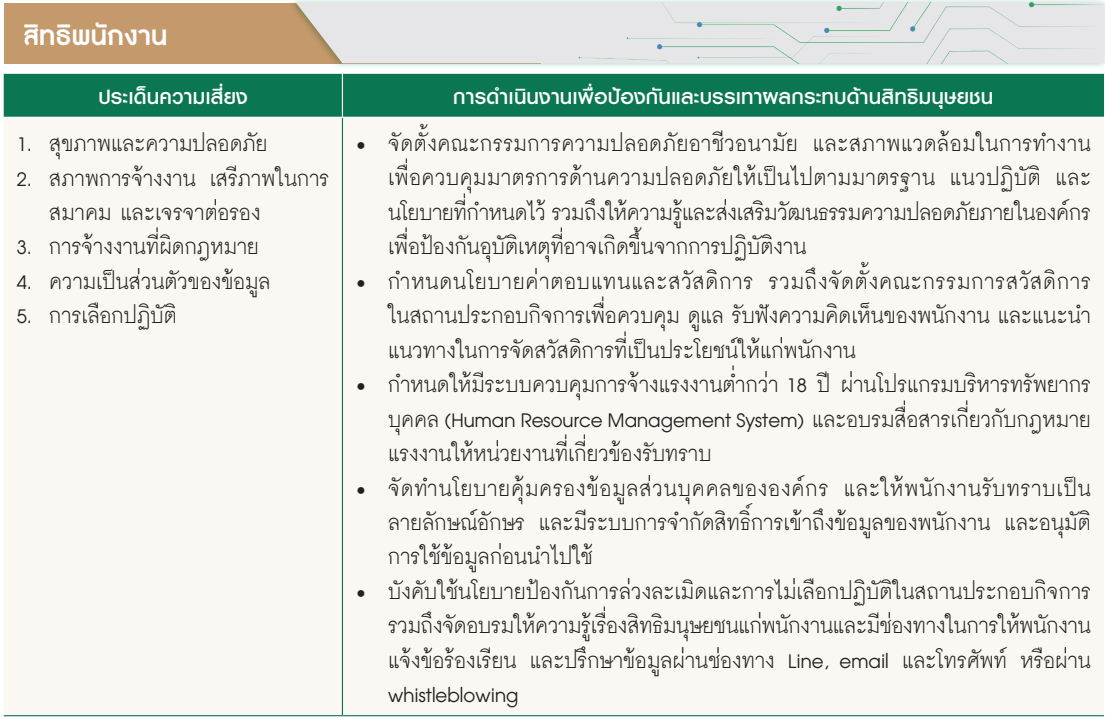
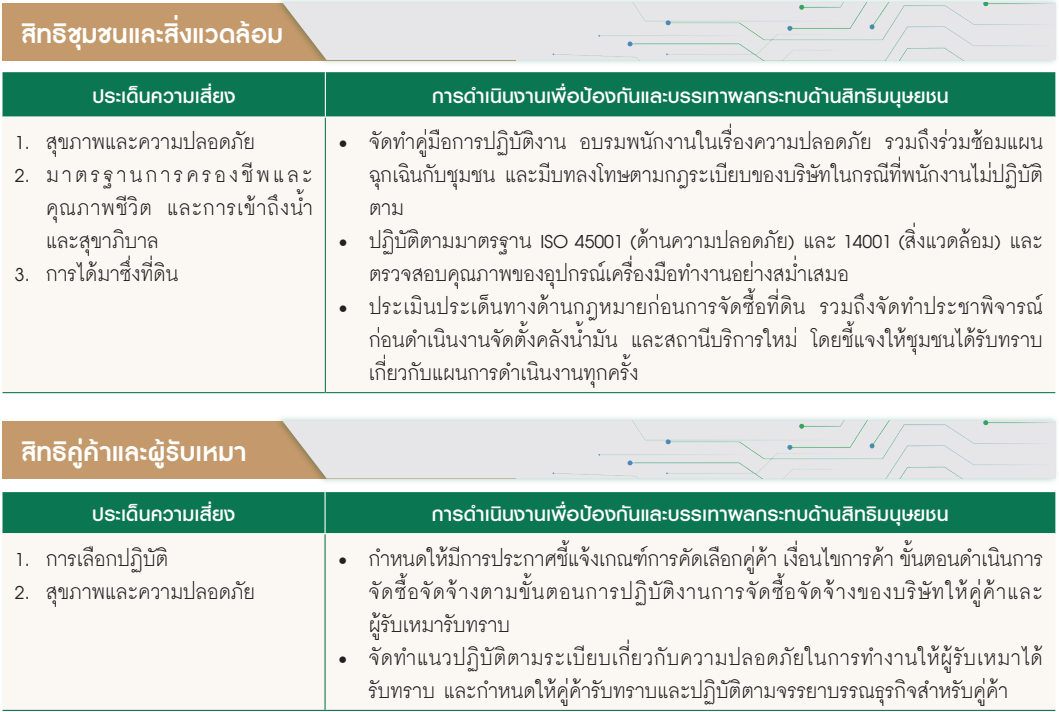
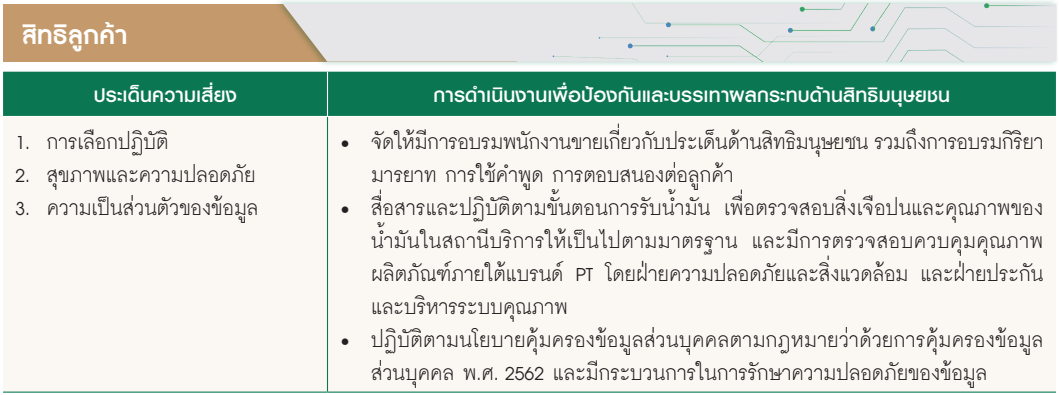
มาตรการป้องกันและบรรเทาผลกระทบสำหรับประเด็นความเสี่ยงด้านสิทธิมนุษยชน
10076
10074